

The UK fabless chipmaker intends to recruit 20 specialist engineers over the next six months, adding European design capacity for satellite communications, physical-layer processing and application-specific silicon.
EnSilica plans to establish a Space & Communications Semiconductor Centre of Excellence in Milan, expanding its European Union engineering presence with expertise in modem architecture, physical-layer algorithms, digital signal processing and millimetre-wave communications.
The UK-headquartered fabless semiconductor company proposes to recruit an initial team of 20 modem and mmWave engineers over the next six months. The Milan team will work with EnSilica’s existing ASIC engineering and operations groups, supporting both customer-funded chip programmes and the company’s own application-specific standard products.
For communications-chip developers, the functions assigned to the new centre sit close to the boundary between system design and silicon implementation. Modem architecture and physical-layer algorithms determine how signals are encoded, transmitted, received and recovered. These decisions also affect the processing workload, memory requirements, numerical precision and power budget that must ultimately be implemented in hardware.
Adding digital signal-processing and mmWave expertise in the same organisation could allow EnSilica to address these engineering decisions earlier in the ASIC development process. The company has not disclosed whether the Milan team will develop complete chip architectures, reusable silicon IP or individual processing and communications blocks.
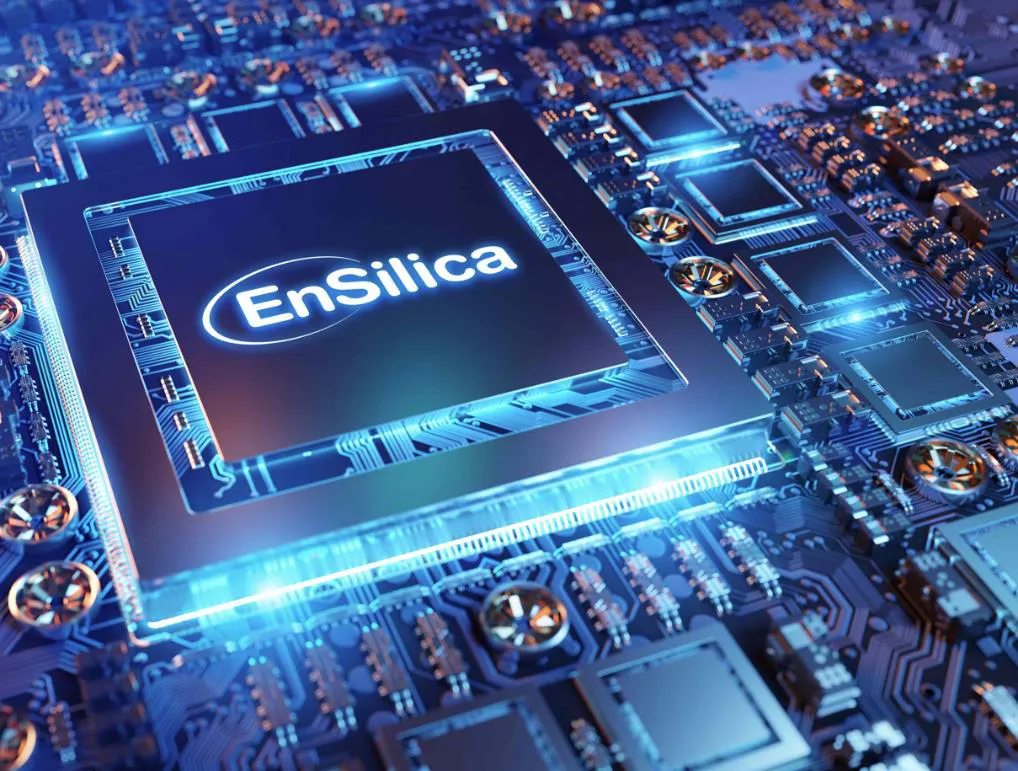
EnSilica describes itself as a European fabless semiconductor company specialising in complex mixed-signal, RF, mmWave and digital integrated circuits. Its communications portfolio covers ASICs and ASSPs for satellite user terminals and payloads, microwave backhaul, radio units and resilient positioning, navigation and timing systems. The company also develops analogue, hybrid and digital beamforming technology and low-power 5G non-terrestrial-network modems.
These markets often require close coordination between communications algorithms and hardware implementation. Digital beamforming, for example, places demands on signal-processing throughput, data movement and converter interfaces, while satellite terminals must balance link performance against power consumption, thermal constraints and equipment size. The Milan announcement does not identify a new device or architecture, but it adds engineering resources in disciplines directly connected with such trade-offs.
EnSilica selected Milan because of northern Italy’s established semiconductor, communications and space-technology ecosystem. The company says the location will provide access to specialist engineering talent, technical universities, research institutes and potential European supply-chain partners. The new operation will complement its design activity in Budapest and its sales presence in Munich.
CEO Ian Lankshear said the initial recruitment would provide specialist capability “at both the systems and semiconductor level” to support EnSilica’s existing project pipeline.
The announcement should be viewed as a planned expansion of semiconductor-design capacity. EnSilica has not disclosed the investment value, exact location, facility size or opening date. It has also provided no details of customer programmes assigned to Milan, supported semiconductor processes, foundry partners, tape-out targets or production schedules.
The company is fabless, so the centre is intended for engineering and chip development rather than wafer fabrication. Recruitment is planned over the coming six months and should not be presented as a completed 20-person expansion.
Even with those limitations, the move is relevant to Europe’s semiconductor sector because it targets a specialised part of the engineering workforce. The practical measure of its impact will be the programmes, reusable IP and tape-outs that emerge once the Milan team becomes operational.
Sources
- EnSilica’s Milan centre announcement, 8 September 2026
- EnSilica communications systems and semiconductor capabilities
Credit: EnSilica