


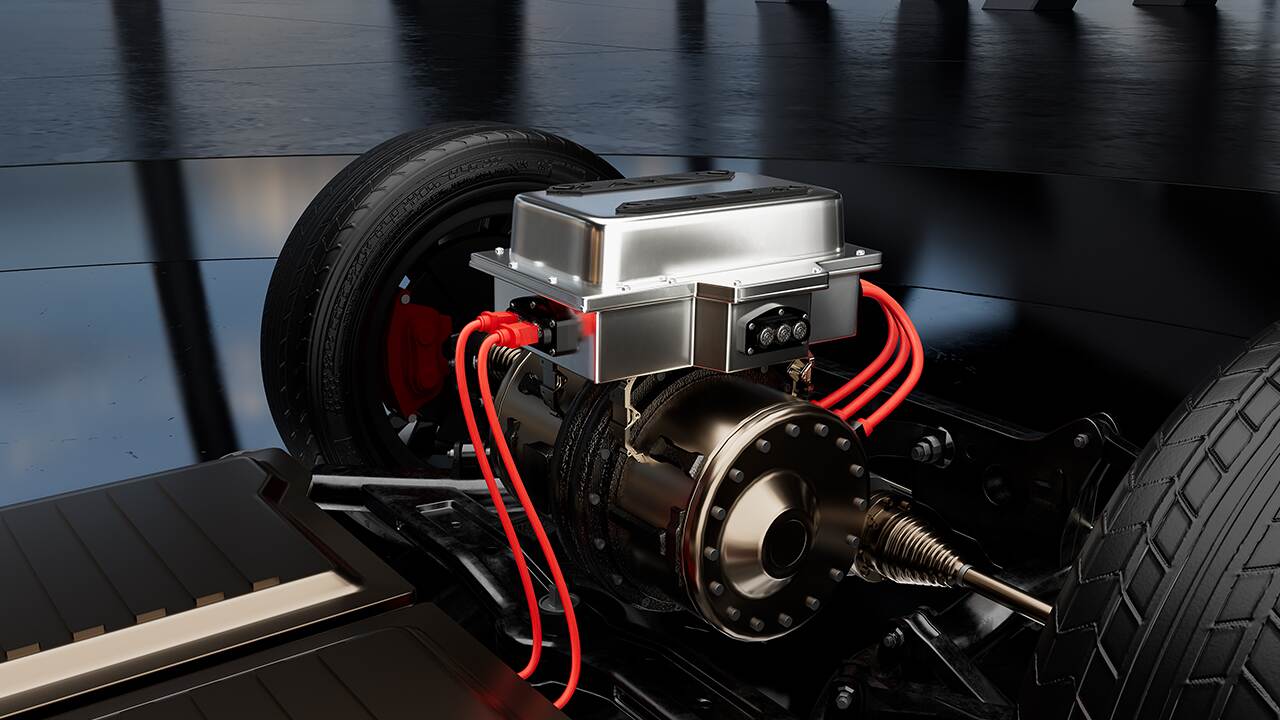
Texas Instruments has introduced the TMCS2100-Q1, a new multiaxial coreless Hall-effect current sensor designed for hybrid and electric-vehicle traction inverters. The device measures magnetic fields in both horizontal and vertical directions, enabling more accurate current sensing without the magnetic cores typically used in conventional solutions. (ti.com)
According to TI, the new architecture can deliver up to 20× greater accuracy than single-axis coreless current sensors, while maintaining displacement error below 1% at 0.4 mm. The sensor is designed to work with standard busbars, helping reduce mechanical complexity and allowing engineers to avoid custom magnetic structures. (ti.com)
Accurate phase-current measurement is critical in traction inverters because it directly affects motor torque control, efficiency and system reliability. The need becomes even more demanding as EV platforms move toward higher-voltage architectures and faster-switching power devices.
TI positions the TMCS2100-Q1 for compact inverter designs where reduced component count, improved thermal performance and higher sensing accuracy can help increase overall power density. The device is automotive-qualified and intended for harsh operating environments. (ti.com)
The launch highlights a broader trend in EV power electronics: as inverter efficiency and power density improve, current sensing itself is becoming a more critical design element, particularly in systems based on high-voltage SiC and next-generation power architectures.
Source: Texas Instruments
Photo credit: Texas Instruments


