




Under the agreement, Ashtrom Industries will evaluate the material’s performance and its potential integration into its operations, subject to compliance with regulatory standards and obtaining the required approvals.
Gabriel Peer, Co-founder and CEO of Starstone: “We aim to revolutionize the global construction industry through our unique technology. The collaboration with Ashtrom Industries will allow us to conduct industrial validation of our product and examine its integration potential into an efficient, low-carbon supply chain.”
The Israeli startup Starstone Biomaterials develops innovative technology for manufacturing biogenic cement, designed to reduce dependence on traditional, energy-intensive production processes in the construction industry. Following this development, the company signed a strategic cooperation agreement with Ashtrom Industries for the applied evaluation of the new technology.
Under the agreement, Ashtrom will conduct a comprehensive industrial pilot to test the material’s performance, its compatibility with existing production processes, and its compliance with relevant regulatory standards. Upon completion of the testing and receipt of the required approvals, the parties will examine the commercial integration of the material into Ashtrom Industries’ operations.
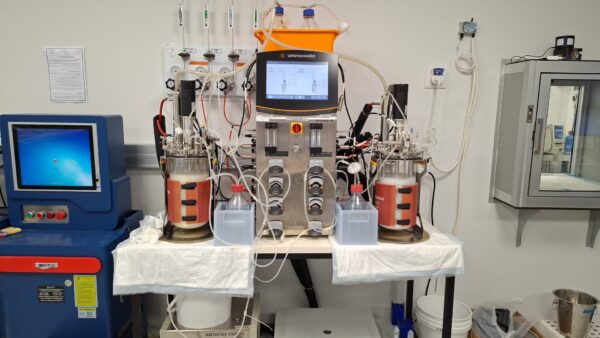
Starstone’s technology enables the production of cement and concrete using bacteria and fermentation systems inside industrial steel bioreactors, utilizing enzymatic processes and byproducts instead of quarried minerals and high-temperature burning. This process is designed to reduce reliance on traditional, energy-intensive methods, which are considered one of the most significant sources of global carbon emissions. According to accepted industry estimates, cement production is responsible for approximately 8% of global carbon emissions.
The company utilizes genetically modified bacteria that undergo a fermentation process along with calcium, carbon dioxide, and food industry waste (such as soy and oats). The resulting product is clean cement designed to integrate into existing production lines, subject to technical evaluation, operational adjustments, and compliance with quality and regulatory standards.
Starstone was founded in 2023 by Gabriel Peer, an entrepreneur with extensive project management experience in infrastructure who previously led the commercialization efforts at cultivated meat company Believers Meat, and Dr. Reut Sorek-Abramovich, a microbiologist and astrobiologist specializing in biomineralization. Starstone’s leadership team includes Dr. Yaron Feldheim, an expert in microbiology and biotechnology; Dr. Stanislav Ratner, who has experience in guiding technologies from development to industrial implementation and navigating global regulatory pathways; and Eitan Berkovitz, who has deep and extensive experience in the cement and concrete industries. To date, the company has raised $1.5 million from NetZero Ventures and the Israel Innovation Authority, as well as $500,000 from the American deep-tech fund SOSV. Starstone employs eight people at its R&D center in Rehovot.
Gabriel Peer, Co-founder and CEO of Starstone: “Our process eliminates the need for kiln heating and reduces energy consumption by up to 80% through a circular economy approach. The collaboration with Ashtrom will allow us to test the technology in a real-world industrial environment and advance through the necessary validation stages. We are already in negotiations with European cement manufacturers and are exploring entry into the US market.”
Sharon Leventer, CEO of Ashtrom Industries, stated: “Ashtrom Industries views the advancement of industrial innovation within the construction materials sector as highly important, along with the early evaluation of technologies that could impact how building materials are developed and manufactured in the future. The collaboration with Starstone reflects our ability to serve as an applied partner for technology companies — bridging laboratory development and industrial testing, while maintaining a strict focus on quality, standards, safety, and performance. Based on the pilot results, we will evaluate the next steps and the potential integration of the material into the company’s operations.”
Credit: Starstone