




The €30 million programme has produced 14 demonstrators, including systems for neonatal diagnosis, grid monitoring and non-destructive testing; the work remains at demonstrator stage.
A European research consortium is reporting the first demonstrators from Listen2Future, a €30 million programme developing next-generation acoustic sensing technologies for healthcare and industrial applications. The project brings together 27 partners in seven countries and combines piezoelectric materials, MEMS structures, electronics, packaging and AI-assisted signal processing.
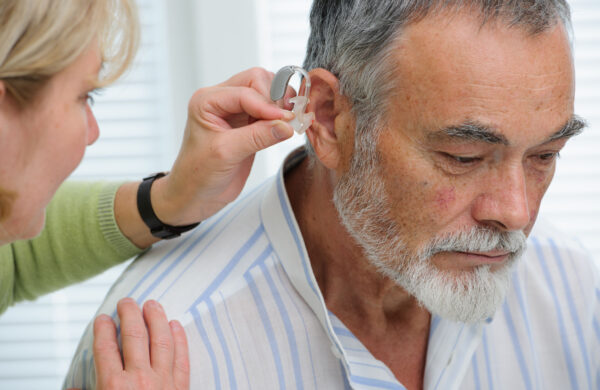
The consortium has developed 14 demonstrators. Among them is a system intended to reduce the time required to scan newborns for meningitis from ten minutes to three minutes. Other demonstrators address partial-discharge monitoring in electrical grids and non-destructive testing for industrial inspection.
One of the project’s non-destructive-testing systems is claimed to be 80% lighter and 50% smaller than a reference system. Those figures, as well as the neonatal scanning result, are project-reported demonstration outcomes rather than independently verified commercial-product specifications. The announcements do not identify production qualification, regulatory approval, deployment scale or unit cost.
That limitation does not reduce the engineering relevance. Acoustic sensing often fails at the interfaces: converting weak physical signals into stable electronic data, filtering noise, packaging the sensor for real environments and applying signal-processing models that remain reliable outside a controlled laboratory. Listen2Future’s value is its attempt to address those layers together instead of treating the sensor element as a standalone innovation.
For industrial users, partial-discharge monitoring and portable non-destructive testing are especially tangible use cases. Both depend on extracting actionable signatures from noisy environments, and both can benefit from lower-power sensors, rugged packaging and local signal processing. The next measure of progress will be whether the demonstrators make the transition to qualified field trials and named customer deployments.