

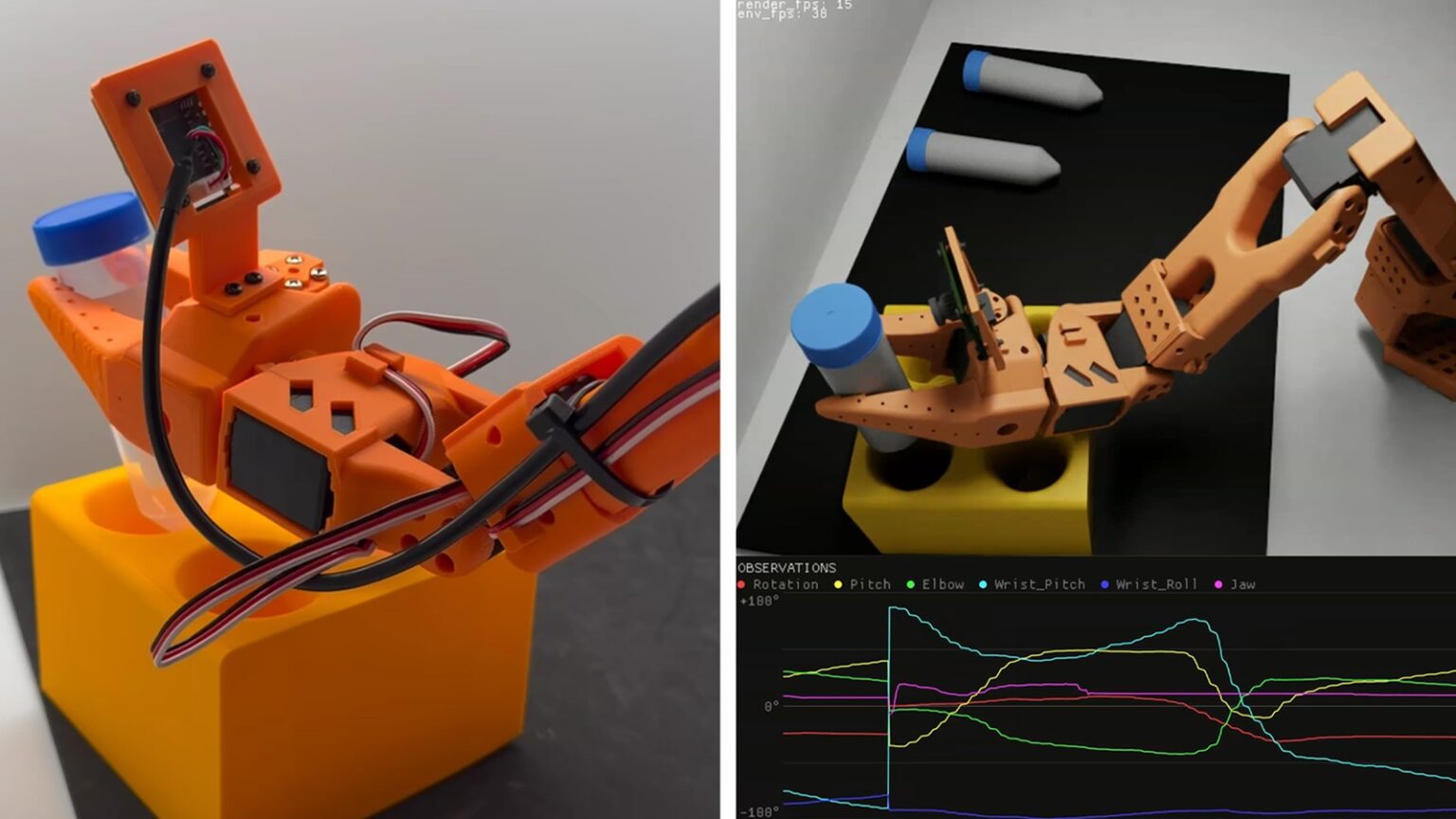
The collaboration brings NVIDIA Isaac GR00T 1.7 and Isaac Teleop to the LeRobot platform, giving developers open access to advanced robotics AI tools, with NVIDIA Cosmos 3 expected to join the ecosystem in the near future.
NVIDIA and Hugging Face have announced an expansion of their collaboration aimed at accelerating the development of open source robotics and Physical AI. As part of the initiative, NVIDIA’s Isaac GR00T 1.7 foundation model for humanoid robots and the Isaac Teleop framework are now integrated into LeRobot, Hugging Face’s open source robotics platform. NVIDIA also plans to add its Cosmos 3 world foundation model in a future release.
The collaboration is designed to provide robotics developers with a unified open platform for collecting data, training and fine tuning robot foundation models, validating performance and deploying AI powered robotic applications.
According to the companies, the integration combines NVIDIA’s robotics technologies with Hugging Face’s open source ecosystem, creating a development platform accessible to millions of AI and robotics developers worldwide.
Thomas Wolf, Co-founder and Chief Science Officer at Hugging Face, said that open source enables researchers and developers to build on each other’s work more efficiently. He noted that integrating Isaac GR00T and Isaac Teleop into LeRobot allows the robotics community to share models, datasets and development workflows, while the planned addition of Cosmos 3 will further expand access to advanced Physical AI capabilities.
The new integrations include Isaac Teleop, an open source framework for collecting high quality robot training data from human demonstrations, and Isaac GR00T 1.7, NVIDIA’s open foundation model designed to simplify the training and deployment of humanoid robots across a wide range of applications.
NVIDIA also announced plans to integrate Cosmos 3 into LeRobot. The model is expected to help developers generate synthetic robotics data, simulate complex environments and support AI training when real world data is limited or difficult to obtain.
The collaboration builds on a growing portfolio of NVIDIA robotics technologies already available through LeRobot, including one of the industry’s largest open robotics datasets, simulation tools based on Isaac Sim and Isaac Lab, and support for rapid development and evaluation of robotic AI applications.
The companies believe that expanding access to open models, datasets and development frameworks will accelerate innovation in robotics while making advanced Physical AI technologies more accessible to researchers, startups and industrial developers.
Credit: Nvidia