





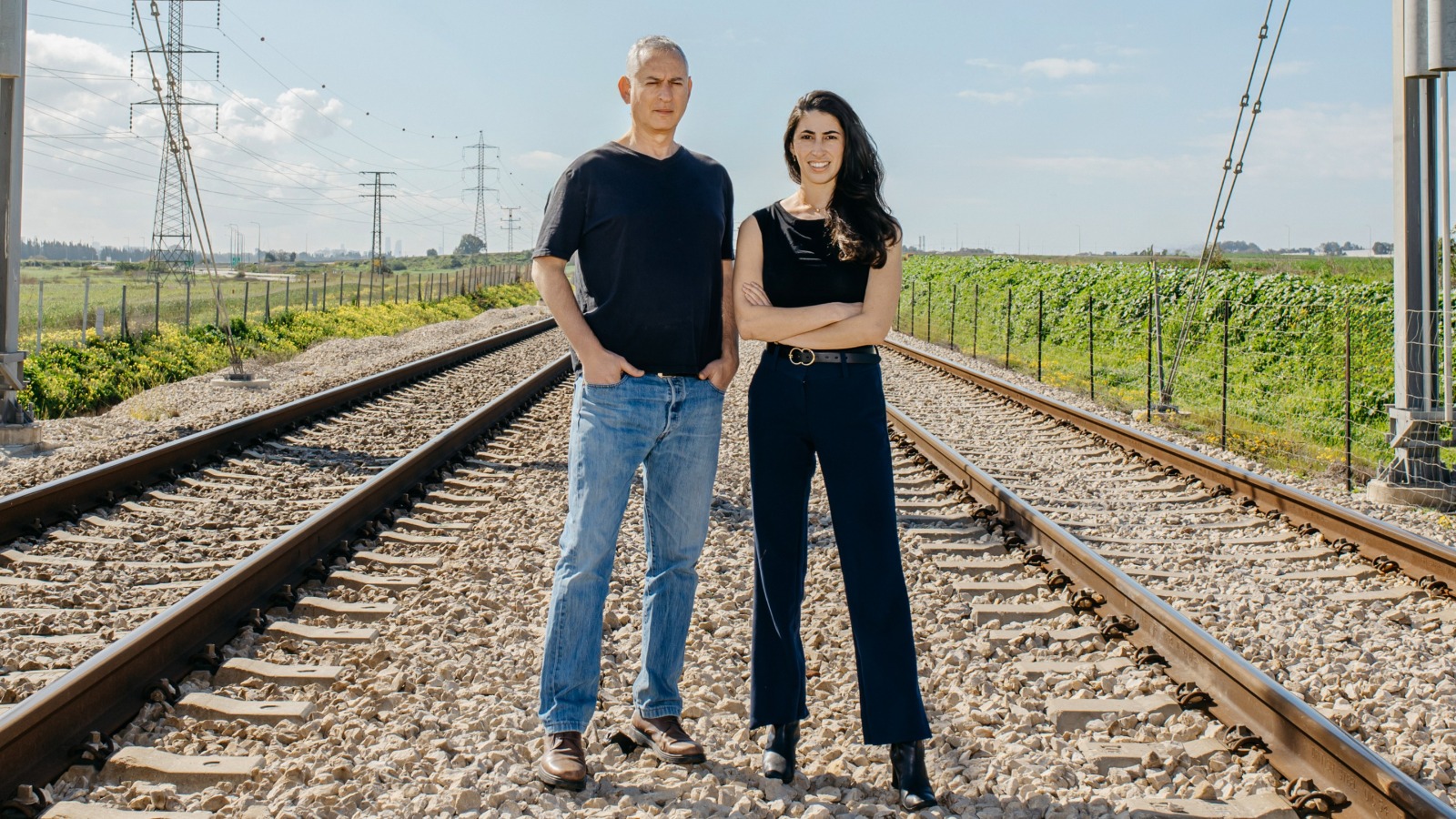
Voltify, the startup pioneering a new approach to rail electrification, today announced it has raised $30 million in seed funding to accelerate the development of its platform designed to dramatically reduce energy costs and emissions across the global rail industry. Voltify was founded by Dafna Langer and Alon Kessel. The round was co-led by venture capital firm Aleph and global mining company Fortescue, with participation from additional strategic investors and prominent angels. Voltify is building a comprehensive solution that enables rail operators to transition away from diesel without the massive infrastructure investments traditionally required for electrification, while drastically reducing their operational expenses.
Freight rail remains one of the most energy-intensive segments of global logistics. In the United States alone, the six largest rail operators spend roughly $11 billion every year on diesel fuel. While electrification could significantly reduce those costs, the traditional approach, installing overhead wires across rail networks, would require more than $1 trillion in infrastructure upgrades, making it financially unrealistic for most operators. Voltify is tackling the challenge with a fundamentally different approach: a distributed energy platform that can reduce rail energy costs by more than 20% without requiring operational changes or large capital investments from rail companies.
“We built Voltify to solve one of the rail industry’s biggest challenges: energy costs,” said Langer, Co-founder and CEO of Voltify. “Our platform allows rail companies to access clean, affordable energy without changing the way they operate. If you can reduce energy costs by even 5%, it’s huge. If you can reduce them by more than 20%, it becomes transformative.”
Voltify’s platform combines battery-powered locomotives, dynamic fast-charging technology, and a network of renewable-powered microgrids deployed along rail routes. Unlike conventional electric trains that must stop to recharge or rely on expensive overhead wires, Voltify’s system enables dynamic charging while trains are moving, eliminating operational downtime and maintaining the current logistics flow. Importantly, the company’s model removes the so-called “green premium. Our goal is to lower energy costs by over 20%; this is not just the diesel costs, but all the next energy that the industry needs,” Langer said. “Rail companies shouldn’t have to choose between sustainability and economics. We’re making clean energy the financially smarter option.”
“Voltify is redefining the energy supply chain for global rail networks”, said Tomer Diari, General Partner at Aleph. “Their electricity-based solution will help rail operators dramatically reduce costs, pollution and dependency on diesel, and make transporting goods in the US cheaper and more reliable for everyone.”
At the core of Voltify’s solution is a distributed network of renewable-powered microgrids deployed along rail corridors. These microgrids generate and store energy locally using solar power, batteries, and advanced energy management software. The system ensures a reliable, off-grid energy supply for rail operations. By generating and managing energy locally, Voltify’s platform can reduce dependence on fossil fuels and enhance energy resilience. “Our vision is to bring the power back to the industry, without dependency on buying diesel elsewhere, this gives the company complete ownership, thus complete freedom.”
Voltify believes its technology could deliver a meaningful climate impact across the global freight network. By 2035, the company aims to reduce more than 50 million tons of CO₂ emissions annually from rail operations alone. The company’s microgrid network could also help reduce reliance on high-emission peaker plants, which collectively produce more than 60 million tons of CO₂ every year. The system is designed to be fully renewable, autonomous, and compliant with the highest safety standards, enabling rail operators to decarbonize without disrupting operations.
Voltify has already signed a paid pilot agreement with one of the world’s largest Class I rail companies, with deployment expected to begin in the coming months. The company also reports a growing pipeline of orders across U.S. regional rail operators. The company expects to demonstrate its fully integrated locomotive, charging, and microgrid platform later this year. “Rail is the backbone of global logistics,” Langer said. “If we can transform how energy is produced and consumed across this network, we unlock enormous economic and environmental benefits.”
Credit: Omer Hacohen


