Researchers at Brigham Young University (BYU), Utah, are “deliberately trying to start a revolution” in the way chemical testing devices are made.
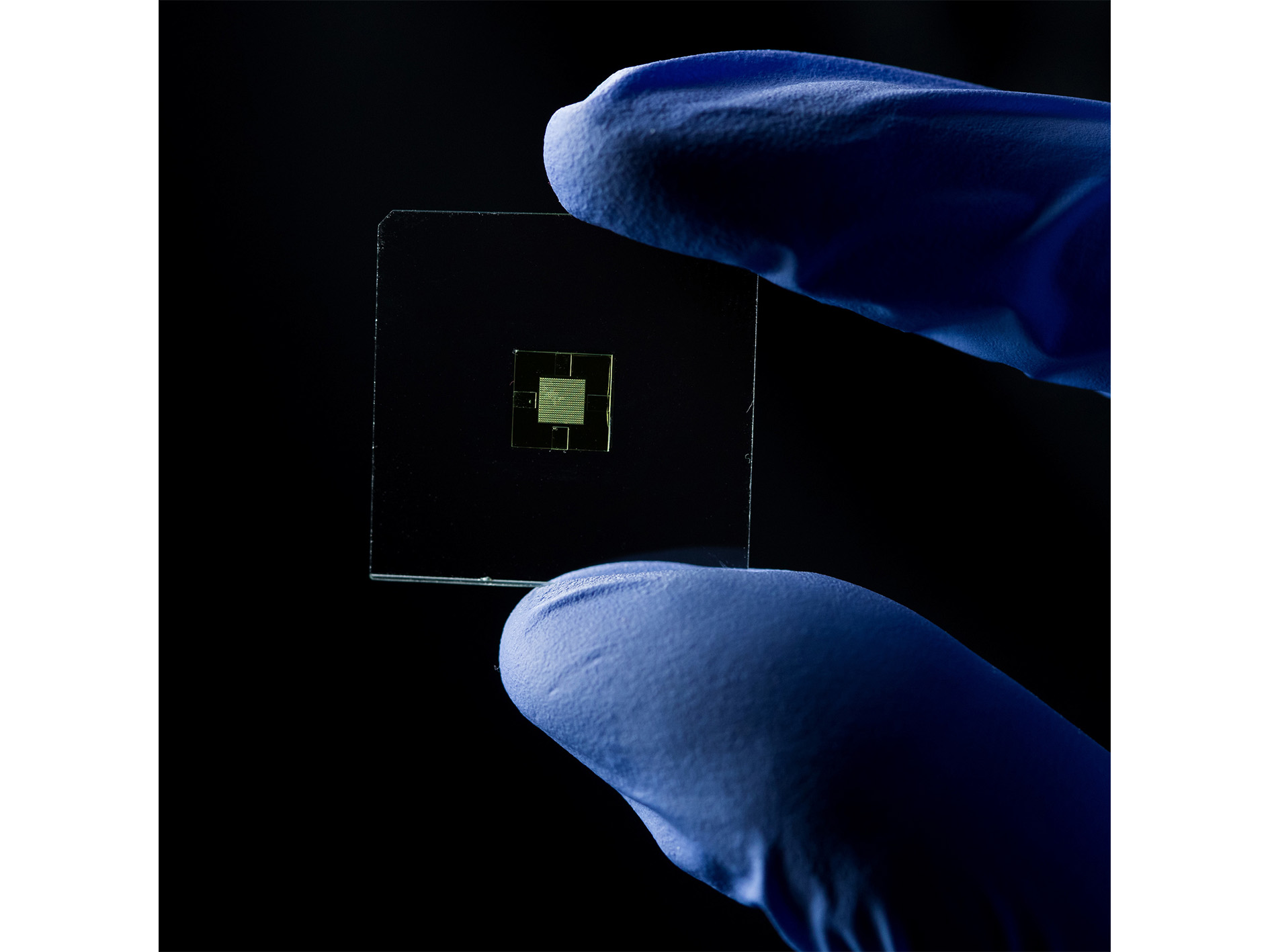
Using a custom built 3D printer, scientists Hua Gong, Bryce Bickham, Adam Woolley and Gregory Nordin, have 3D printed a microfluidic chip at a resolution previously unseen in the industry.
The method is poised to crack-open a mode of research that has remained relatively unexplored due to the cost of lab-on-a-chip fabrication.
A revolution in the making
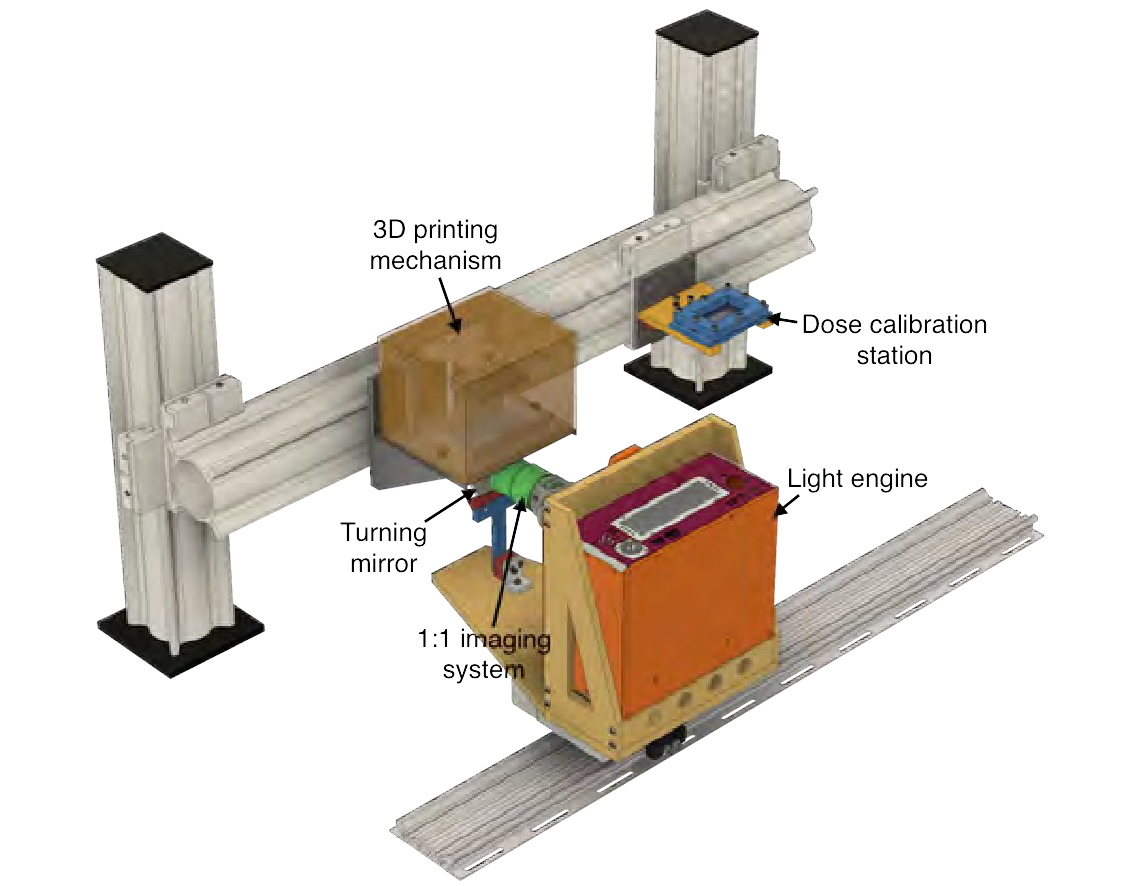
Gong, Bickham, Woolley and Nordin’s method uses a DLP-SLA 3D printer.
The custom-made machine is capable of 3D printing features as small as 18 μm × 20 μm, considered by the researchers to be a truly microfluidic scale.
“Others have 3D-printed fluidic channels,” says Nordin, “but they haven’t been able to make them small enough for microfluidics. […] We’re deliberately trying to start a revolution in how microfluidic devices are fabricated […] So we decided to make our own 3D printer and research a resin that could do it.”
The material world
One of the main challenges faced by the researchers was that the light source inside DLP-SLAs is not fine enough. In place of a typical 405 nm LED, the BYU 3D printer has a 385 nm LED.
Changing the light source dramatically increased the range of materials available to the DLP-SLA 3D printer. By researching these resins the team devised their own recipe for an appropriate material.
Millimeters in microns
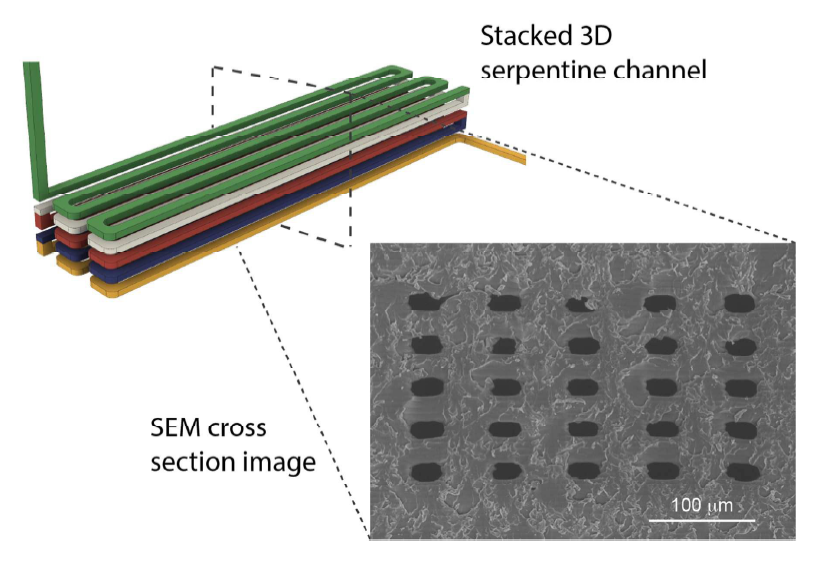
Realising the capabilities of the 3D printer was completed by creating a 0.12 mm squared chip containing serpentine flow channels 41 mm long.
By adding stem cells to the chip’s channels and introducing blood flow the researchers could, for example, test how tissue behave in the heart’s arterioles. Typically 20 to 30 μm in diameter, these vessels are responsible for transferring blood to capillaries.
Considering Woolley’s expertise, the technology is likely to be used in detecting conditions in the body responsible for preterm/premature birth. Another microfluidic device developed by Woolley can predict these chances with up to 90 percent accuracy.
Challenging the industry
The serpentine design by the team takes around 30 minutes to print. As the devices are small, multiples can be 3D printed in the same job, making the method economically effective.
A full paper on the methods discussed in the article can be viewed online in Lab on a Chip journal. Conclusions state that “3D printing is finally positioned to challenge the pre-eminence of methods such as soft lithography for microfluidic device prototyping and fabrication.”
The collaboration between Tower Semiconductor and Scintil Photonics offers a clear view into the future…
How virtual twins, accelerated computing and physics-based models are turning AI from smart software into…
For decades, cellular communication has relied on one almost unquestioned assumption: the base station is…
IBM (NYSE: IBM) today announced new results that its quantum computer can simulate real magnetic materials…
Arrow Electronics has announced the launch of a new evaluation platform, jointly designed in collaboration…
Siemens has unveiled Drivetrain Analyzer Onsite, a new on-premises analytics solution for industrial drive systems,…